


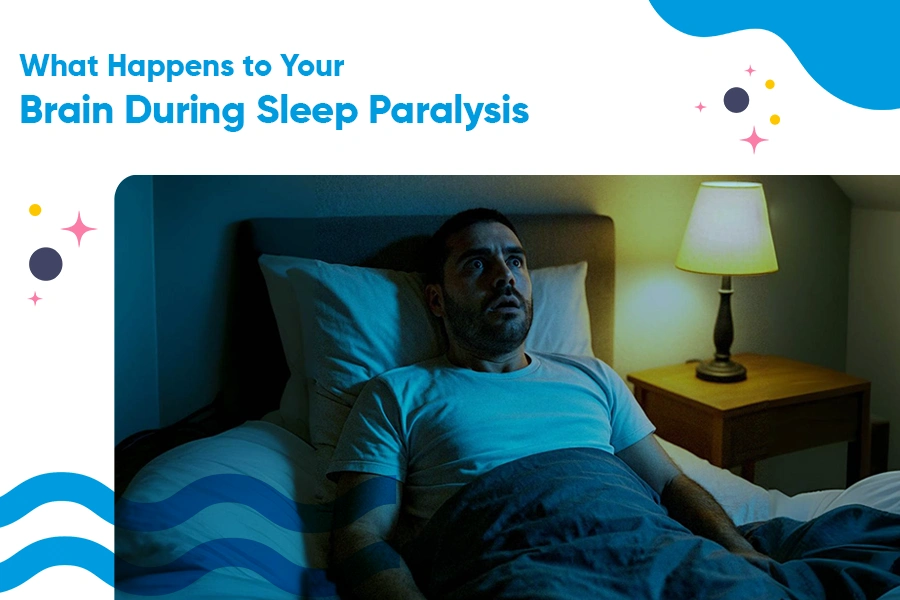
Somewhere between one stage of sleep and the next, the brain occasionally gets its wires crossed. A person wakes up aware, eyes already open and the body just doesn’t follow. Not a limb, not a finger, nothing. For however many seconds that lasts, which always feels longer than it actually is, there’s this strange gap where the mind is fully online and the body hasn’t gotten the memo yet.
That gap is sleep paralysis. It gets talked about like it’s some rare, spooky glitch, but it’s not that unusual, and it’s not a malfunction. One clocks in early. The other’s still asleep at the wheel. And whatever gets reported afterward is usually the pressure on the chest, the shadow in the corner, the feeling of not being alone in the room and all of that traces back to a fairly specific, fairly explainable mix-up in how the brain manages sleep.
The REM sleep thing nobody really explains well
REM sleep is the stage where most vivid dreaming happens. During REM, your brain is doing this bizarre thing where it’s almost as active as when you’re awake or maybe more, depending which study you read; but your body is essentially switched off. It is known as Muscle atonia. Basically the brain sends a signal that shuts down voluntary muscle movement so you don’t act out your dreams and, I don’t know, punch your partner or fall out of bed running from a dream tiger.
Normally this shutdown and the waking-up process line up fine. You come out of REM, the sleep paralysis lifts, you’re up. Simple. Except sometimes the timing gets off. The brain wakes up; consciousness switches back on; before the body’s muscle-lock has been released. You are awake, aware and stuck. It’s not dangerous, for what it’s worth, even though it feels like the opposite of safe.
Why does the brain do this weird waking-but-not-waking thing?
There isn’t one single, tidy answer, honestly. Researchers point to a handful of contributing factors and none of them fully explain every case. Sleep deprivation is one of the big ones; when you’re not getting enough sleep, your sleep architecture gets messy, REM cycles get disrupted, and that disruption seems to make these overlapping episodes more likely. Which is annoying because sleep deprivation itself causes half the symptoms people blame on other things anyway like brain fog, irritability, that spacey feeling where you forget why you walked into a room.
Sleep paralysis also causes irregular sleep schedules (shift workers get hit with this a lot), sleeping on your back-this one keeps coming up in studies, though nobody’s fully sure why back-sleeping correlates so strongly and the other causes are high stress, anxiety, and existing sleep conditions like narcolepsy. Narcolepsy in particular has a much stronger link to sleep paralysis than most people realize.
The hallucination part that happens too
During sleep paralysis a lot of people report seeing or sensing a presence in the room like someone standing near the bed, weight pressing on the chest, sometimes actual visual or auditory hallucinations. This happens because REM dream imagery can bleed into the waking state. The brain hasn’t fully closed the dream door yet, so you get this overlay of dream content on top of your actual, physical, awake surroundings. It’s basically your dreaming brain refusing to clock out on time.
Not everyone gets hallucinations though. Some people just get the paralysis part, no visitors, no shadow figures, just stuck and panicking a bit. Both versions count as sleep paralysis, for the record.
Is this a sleep disorder or just a one-off weird thing?
For a lot of people it happens once or twice in a lifetime, usually tied to a rough stretch of poor sleep or high stress, and that’s it, done, never again. For others it becomes recurrent, and at that point it starts overlapping with actual sleep disorder territory; sometimes classified as recurrent isolated sleep paralysis, which is its own diagnosis category. If it’s happening often enough to mess with someone’s quality of life or sleep confidence (people genuinely get scared to fall asleep, which is ironic, since sleep deprivation makes it worse), that’s usually when sleep disorder treatment conversations come up with a physician.
Treatment isn’t usually some dramatic intervention either. A lot of it is addressing whatever’s underneath like treating anxiety, adjusting sleep schedules, sometimes medication if it’s tied to something like narcolepsy. Cognitive behavioral approaches get used too, especially for people who’ve built up real fear around bedtime.
Sleep hygiene
Sleep hygiene is one of those terms that sounds like something a wellness influencer made up but it’s genuinely just about consistency; same sleep and wake times, cutting back on screens before bed, not drinking caffeine at 6 pm and wondering why you’re staring at the ceiling at midnight. None of this is exciting advice. It’s not supposed to be. Good sleep hygiene reduces sleep deprivation, and less sleep deprivation means more stable REM cycles, which means fewer chances for that brain-body mismatch to happen in the first place.
Doesn’t guarantee it won’t happen. Nothing really guarantees that. But it tilts the odds.
Symptoms of sleep deprivation overlap with this more than people think
It’s worth mentioning again because it keeps coming up; symptoms of sleep deprivation like fragmented sleep, excessive fatigue, irregular REM patterns, these aren’t separate from sleep paralysis, they’re often feeding directly into it. Someone who’s chronically under-slept is, in a weird roundabout way, priming their brain for more of these episodes. It’s a bit of a loop. Bad sleep causes paralysis episodes, paralysis episodes cause fear of sleep, fear of sleep causes worse sleep. Around it goes.
What’s the actual brain mechanism in summary
Strip away all the peripheral stuff and it comes down to this: the brainstem regions responsible for REM muscle atonia; particularly areas involving the pons are still actively suppressing motor neurons even after cortical arousal has occurred, meaning the thinking, aware parts of the brain have essentially woken up while the parts controlling voluntary movement haven’t caught up yet. It’s a timing failure between two systems that are supposed to be synchronized. Not damage, not a malfunction exactly, just bad timing, and honestly the brain does more impressive coordination feats every single night without anyone noticing.
Which makes it kind of strange that this is the one that gets all the attention. Though I guess being conscious while unable to move your own body is a pretty memorable glitch, all things considered.
FAQs
-
Is sleep paralysis dangerous?
No, it’s not physically harmful, even though it feels alarming at the moment.
-
How long does an episode usually last?
Usually just seconds to a couple of minutes, though it can feel much longer.
-
Can sleep deprivation trigger sleep paralysis?
Yes, poor or inconsistent sleep is one of the most common triggers.
-
Is sleep paralysis a sleep disorder or not?
It could be especially narcolepsy but a lot of people have it without any underlying disorder.
-
Does improving sleep hygiene help prevent it?
Generally yes, more consistent sleep tends to reduce how often it happens.