


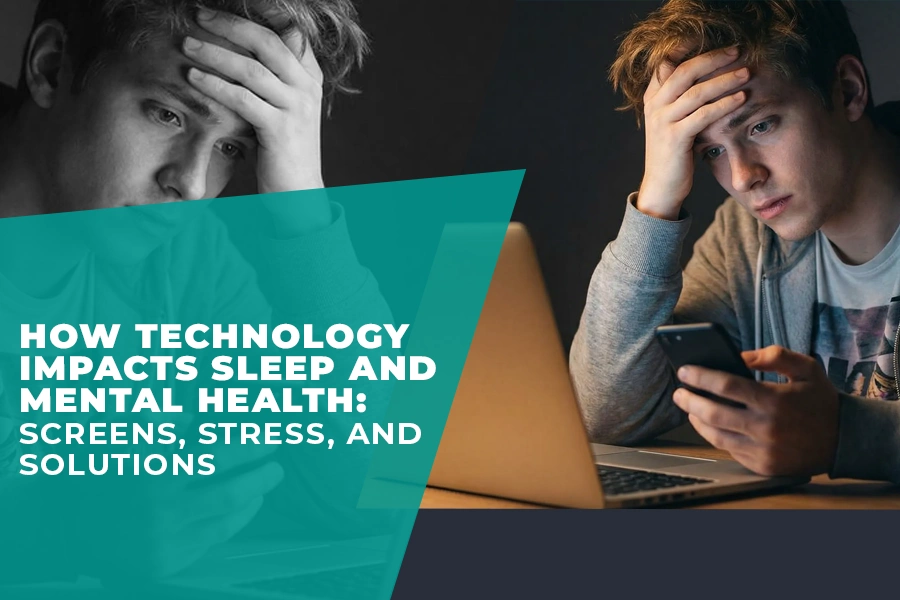
The silence of the night is broken by the light and ringing of the phone. A loop of never-ending scrolling, late-night notifications and overstimulated minds that refuse to switch off has transitioned the natural cycle.
In an era, where staying connected is a rule, sleep is no longer just about closing your eyes- it’s about escaping the digital noise.
Due to technological advancement , there is an unseen impact on human emotions, thoughts and sleep patterns. Underneath convenience and connectivity lies a growing concern: our screens may be reshaping not just our sleep patterns, but our mental well-being in ways we are only beginning to understand.
Link between Technology, Sleep and Mental health
According to reports, the average American spends more than 10 hours a day using technology be it computers, laptops or mobile phones. Sleep quality is increasingly impacted by technology use in many ways.
There is a strong yet subtle impact of technology on sleep quality and mental health. The brain relies on the natural signs like light and darkness to regulate sleep cycles. However, persistent exposure to screens and digital stimulation disrupts the balance between technology and sleep mental health. Screens emit short-wavelength blue light, which inhibit the production of melatonin that is responsible for sleep regulation, tricking the brain into staying awake.
When quality of sleep is compromised, mental health is also linked with it. Poor sleep acts as a mediator with excessive screen time often causing a vicious cycle of fatigue and reduces emotional regulation. Poor sleep is closely linked to mood changes, reduced cognitive performance and emotional instability. Over time, this leads to a vicious cycle where lack of sleep worsens mental health and mental distress further interrupts with sleep. 
Effects of Technology on Sleep
The key effects that are seen due to technology on sleep are:
- Melatonin Suppression: Blue light from screens mimic the daylight which tricks the brain to stay awake by preventing the release of the sleepy hormone-melatonin
- Bedtime Procrastination: When you procrastinate your sleep schedule that can lead to poor sleep as people often lose track of time while using devices
- Disrupted sleep cycles: Technology use can disturb the REM and slow-wave sleep which are quite vital for cognitive function
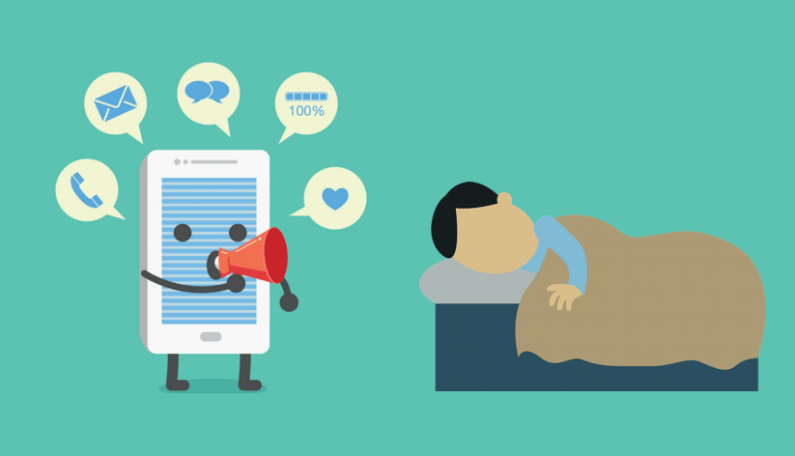
- Notifications disruptions: Notifications and alerts can disrupt the sleep schedules and lead to poor sleep quality
- Cognitive overstimulation: When you are engaged with fast-paced content like videos, games or social media, it keeps your brain highly active. This cognitive overstimulation makes it difficult for your brain to transition into a relaxed state that is required for sleep.
- Increases anxiety and stressIrregular sleep patterns
- Reduced sleep duration: Spending extra hours on devices can cut down the total
- sleep time.
- Nighttime awakening
- Eye strain and physical discomfort: Extended hours of work can lead to digital strain, headaches and even neck or shoulder discomfort.
- Dependency and habit forming
Screen Time and Sleep problems
One of the biggest contributors to sleep problems is overexposure to screens. Screen time to sleep problems are interconnected because devices such as mobile phones, tablets and laptops stimulate the brain when it should be winding down. Let us have a look on how screen time affects sleep:
- Delay in bedtime due to prolonged use of scree
- Interrupts deep sleep cycles
- Reduces total sleep duration
- Keeps the brain in an alert state
Late night binge watching and scrolling can trick the brain into staying alert rather than switching off and thus this results in lower sleep time.
Blue Light and Sleep cycle
Blue light is a wavelength of light often emitted from electronic devices and artificial lights. It can influence alertness, hormone production and sleep cycles. Light is the most important factor that influences the circadian rhythm and they were majorly linked with sunrise and sunset. With the advent of artificial lights and electronics, people are being exposed to an increased amount of light before bedtime. While most of the lights can impact circadian rhythm, blue light has the largest impact on it.
Blue light hinders the body’s release of melatonin, a hormone that impacts the sleep-wake cycle. While this is helpful during the day, it can be quite troublesome during the night as it can disrupt the sleep. Being exposed to blue light during the evening can trigger sleep quality.
Common sources of blue light:
- Fluorescent lights
- LED Lights
- Smartphones
- Computer screens
- Televisions
- Tablets
- E-readers
- Gaming consoles
The good news is that the risks of nighttime blue light exposure can be reduced relatively by following simple methods.
How much Screen time is too much?
How long before sleeping should you use the phone? According to studies, 2 to 3 hours of screen time in the evening can seriously disrupt the melatonin which is the factor that affects sleep quality. Consider turning off all your electronic devices at least one hour before bed. If you need to use the devices make sure to limit the exposure to blue light by decreasing the brightness or switching your device to nighttime mode. You can also download an app that will help your device to adjust the brightness based on the time of the day or light.
Kids and teenagers should be away from screens before bedtime is quite vital for good sleep. Other options to avoid screen time are:
- Read books, magazines or newspapers
- Choose to call people instead of texting
- Engage in drawing, painting
- Play musical instruments
- Play sports or go on a walk
- Follow any other relaxing activity
All these activities will help to manage and limit the screen time.
Digital stress and anxiety
Life is unpredictable and influential. There’s no second thought that technology and social media has intensified our anxiety. A very common example of digital stress is stress that is caused by a negative comment on a text, email or social media post. Other examples are FOMO(Fear of Missing Out), lack of adequacy, hopelessness and envy from social media as well as feelings of social isolation and loneliness by spending too much time on social media.
Sources of digital stress:
- Endless notifications and messages
- Pressure to stay online and active
- Exposure to negative news and content
- Work-related communication outside office hours
Tips for addressing digital stress and anxiety:
- Record your digital habits
- Keep an anxiety journal
- Accept that anxiety is a part of your life both online and offline
- Limit social media and screen time
- Commit to daily non-digital self care practices
Practical Solutions: Improving sleep in Digital World
While avoiding technology completely isn’t realistic, mindful usage can significantly reduce the negative effects that it carries:
- Set a Digital Curfew
Avoid screens at least 60-90 minutes before bedtime as it can disturb the sleep cycle. This allows the brain to sleep naturally.
- Limit Notifications
Turn off non-essential notifications and also reduce the volume to avoid disruptions and stress.
- Create a sleep-friendly environment
You cannot sleep peacefully if you do not have an environment that supports good sleep. For better sleep, keep bedrooms dark, quiet and dark from digital distractions. Avoid using your bed for scrolling or watching content.
- Use Blue light filters
Blue light filters are the one that reduces high-energy visible light emitted by screen. It helps to alleviate digital eye strain, fatigue and improves sleep quality by preventing the suppression of melatonin.
- Practice mindful technology use
Always keep track of the screen time. Replace late-night scrolling with calming activities like reading, journaling, meditating, etc.
- Follow a consistent Sleep Schedule
Go to bed early and wake up early even on the weekends as it can help you to maintain a consistent sleep schedule. This will also regulate your internal clock.
- Use Traditional alarm clocks
Instead of using phones to set up alarms, use a traditional clock which will help to remove the need to have your mobile phones by your bedside and also prevent last moment scrolling and early morning checking.
- Go grayscale
Switch your mobile phone screen to black and white mode to make apps less stimulating and addictive.
- Medical solution
There are medications that can help you fall asleep or reduce your mental fatigue like Artvigil 150 and 250 that consists of Armodafinil.
Role of Wakefulness promoting medications
In some cases, lifestyle changes alone cannot be a solution and thus they need medical intervention. This is where wakefulness promoting medications like Artvigil 250 may be considered under medical supervision. Artvigil 250 contains Armodafinil, a wakefulness promoting agent and is often prescribed for sleep disorders like Narcolepsy, Obstructive Sleep Apnea and Shift Work Sleep Disorder. However, it does not replace healthy sleep habits and should be used only under medical supervision.
Conclusion
The relationship between technology, sleep and mental health is undeniable. While technology enhances productivity and connectivity, its overuse can disrupt sleep, increase stress, and negatively impact mental well-being.
By understanding concepts such as screen time and sleep problems, blue light and sleep cycle and so on individuals can take a step towards healthier lifestyle.
FAQs
- How does technology affect sleep and mental health?
Screen use at night harms sleep by emitting blue light which decreases melatonin and due to there is an impact on mental health as all of this are interconnected.
2. How much screen time is safe before bedtime?
The optimum time before bedtime is around 60-90 minutes before sleep.
3. What are the simple ways to improve sleep in the digital world?
The simple ways to improve sleep are setting a digital curfew, using blue light filters, limiting notifications, maintaining a consistent sleep schedule, etc.
4. Is technology affecting children’s and teenagers’ sleep more?
Yes. Children and teenagers are more sensitive to screen exposure. Excessive screen exposure can disrupt sleep quality.