

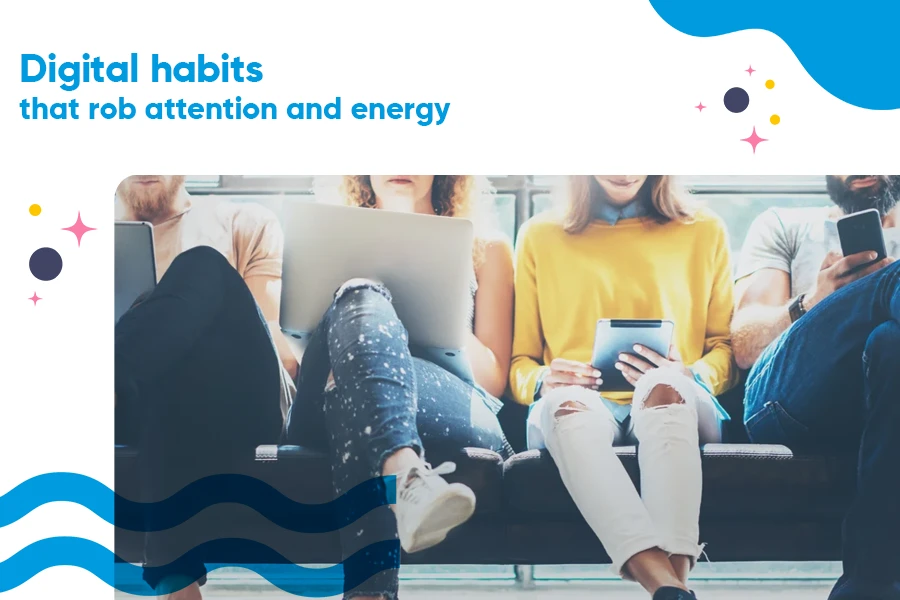
Today’s life is a screen-based life, and most of us have developed our digital habits without really thinking about them. We pick up our phones immediately after waking up, open a number of applications while at work, and scroll through feeds when we should be resting. But taken together, they are deadly.
They all subtly sap mind energy, distract attention, and make many people feel tired after staying seated for hours and hours during the day. You should know how these patterns develop and how to break them, which becomes crucial for finding focus and energy in a more connected world.
Digital Habits: The Constant Pull of Notifications
There’s nothing more distracting than a constant stream of notifications. Each of them is designed to distract from what you’re doing and draw your attention to a screen. Whether or not a notification is read, research indicates that being conscious of its existence can stay within the back of your mind, somewhat lowering the performance of the task you were doing.
There may be dozens or hundreds of these interruptions during the day, and each demands a little mental work to process and get over. It’s this constant switching from tasks to alerts that’s a huge factor in people’s daily fatigue and one that’s not always obvious. Much of this distraction is driven by today’s attention economy, where apps compete continuously for user engagement through notifications, personalized feeds, and endless content.
Why Mindless Scrolling Feels Relaxing but Isn’t
During a bit of a break, many people will reach for their phones, expecting to refresh themselves with a little mindless scrolling. In truth, that “unending feed” is not a true rest. Downtime allows the brain to rest and relax. Scrolling, however, keeps the brain constantly taking in new information, images and stimuli, one after the other. So, after a scroll, you might feel relaxed but still not refreshed because of this.
Digital habits are particularly problematic when they take up all the little bits of time in the day and leave little time for the brain to simply rest.
Debunking the Multitasking Myth
The multitasking myth is one of the most entrenched productivity misconceptions out there. Then people can get more done in a shorter period of time by switching between tasks frequently. The reality is that the brain does not work on several challenging tasks at once but rather alternates, and the brain incurs a “cost” with each transition between tasks.
The constant switching up of tasks can make the brain tired and cause less quality work. In the end, it may take longer than switching to one task at a time. Multitasking is particularly tempting in the digital environment, along with many apps, tabs, or devices vying for attention at the same time. These are creating a false sense of productivity and making this task less efficient and less energizing. It is called digital habits.

The Weight of Information Overload
In addition to personal distractions, many people are taking in more information than their brains can easily handle. The information overload happens when the amount of emails, messages, articles, and updates is too much for a person to digest and take action on. Instead of being informed, people feel overwhelmed, indecisive and mentally clogged because of their digital habits.
This overload can be counterproductive, leading to the sense of background exhaustion many feel at the end of the day, despite little activity. One of the reasons why modern life is mentally exhausting is because the constant stream of digital information makes it harder and harder for the brain to recover from constant stimulation .
Setting Screen Time Limits That Actually Work
Oftentimes, the first step to changing these patterns is to set clear screen time boundaries. For many, it’s a matter of digital habits, and they prefer to use built-in device tools that monitor and limit access to specific apps, especially ones most closely linked with mindless scrolling.
Limitations are not a quest to eradicate technology but rather a strategy to establish boundaries that do not allow technology to take over all time. Over time, these boundaries serve to reprogram attention spans, making it easier to sit and focus for longer periods of time than to ‘default’ to short bursts of screen time.
How to Protect Your Focus in a Distracting World
It takes more than just good intentions to learn to take care of the focus. Sometimes, it involves changing the environment because of digital habits. If you can quiet nonessential notifications, keep your phone out of reach during quality work, or set times to check the messages instead of replying immediately, you’ll minimize the constant temptation to be distracted. The focus also comes from being more intentional about which digital inputs are important at all; not all verbal notifications, messages, or updates are equal.
By creating this type of intentional filter, you may practice and greatly decrease the mental static throughout the day.
Simple Ways to Reduce Digital Fatigue
When it comes to minimizing digital fatigue, it’s important to consider how often and how high-quality the interactions with screens are happening during the day. Prolonged, continuous screen exposure without breaks is less restorative than shorter, focused sessions with breaks, where there is real rest. Lowering screen brightness, taking breaks by looking at something in the distance, and taking a break from all screens during meals or conversations are all factors that reduce overall fatigue. It’s not just about reducing overall screen time. It’s about reducing the time spent in less productive and more frivolous bits and pieces.
If persistent screen exhaustion is affecting your concentration, learning more about managing digital burnout without losing productivity can help you recognize the warning signs and build healthier work habits.
The Underrated Single-Tasking benefits
With the proliferation of multitasking being exposed as a negative, there is an increasing focus on the single-tasking benefits gained by concentrating on a single task. Single-tasking allows the brain to reach a higher level of concentration, sometimes referred to as “flow,” which makes the focus feel natural and effortless, and leads to higher productivity. This also helps to reduce the mental fatigue that can come with all of the switching throughout the day, leaving more energy for the rest of the day. Single-tasking invariably leads to superior results and satisfaction, whether on the job, in discussions, or even in recreational reading.
Why Digital Detox Breaks Matter More Than Ever
Digital Detoxes are valuable resets for the nervous system. The breaks don’t have to be dramatic and of long duration; even brief regular intervals away from screens throughout the day can make a difference by reducing the overall mental load of constant screen time. It can be a screen-free morning, a walk without talking on the phone, or an unplugged weekend.
These are moments that we make up to regain our attention. With consistent digital detox breaks, a healthier relationship with technology can develop, and phones and other digital tools can become something that you control, not that you have to control.
To Conclude: Building Healthier Digital Habits Going Forward
From this above analysis, it can be said that reclaiming attention and energy is not a technology-free process but one in which the use of technology is more purposeful and intentional. These are all important strategies for a more peaceful and productive existence for digital habits. Together with some practical ideas such as setting screen time limits, taking conscious breaks from screens, and genuinely prioritizing focus, using digital tools is no longer the thing that quietly sucks the mental energy out of you.
FAQs
1. Why do constant notifications drain mental energy even when you ignore them?
Constant notifications drain mental energy. Even when you ignore them, if a notification isn’t addressed, it makes a person aware, but then they don’t really pay attention to it, and this awareness can slowly become fatiguing throughout the day.
2. Is multitasking really less effective than focusing on one task at a time?
Yes, multitasking is really less effective than focusing on one task at a time. The brain works among tasks without really processing them simultaneously. Each change comes at a cost of cognition, which reduces the efficiency and the quality of work.
3. How can you set screen time limits that actually stick?
You can set screen time limits in different ways. Built-in restrictions and monitoring tools for specific apps (as opposed to willpower) work better, and so do clear, consistent limits on when and where screens are used.
4. What’s the difference between mindless scrolling and a genuine break?
The difference between mindless scrolling and a genuine break is people feel drained after they scroll for a long time. Because they don’t get a break from the constant influx of new information and stimuli.
5. How often should you take digital detox breaks?
You should take digital detox breaks as per your need. Digital fatigue can be significantly reduced with regular, but brief, breaks throughout the day, as well as short intervals of longer digital-free periods (such as a digital-free morning or weekend) if occasionally possible.