


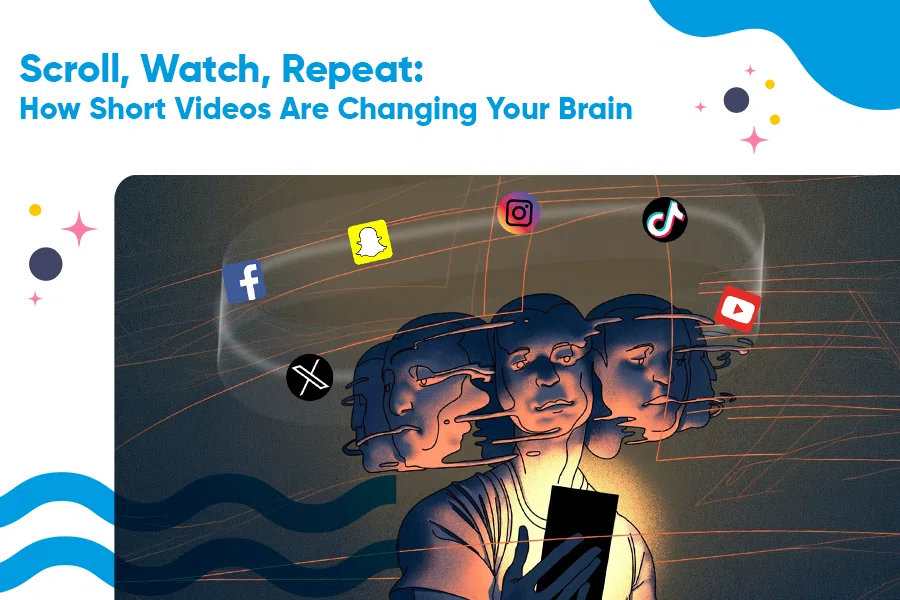
Somewhere between the fifth and fiftieth reel of the evening, most people stop noticing they’re even doing it anymore. The thumb just moves. Up, up, up. Nobody decided to spend forty minutes watching fifteen-second clips about kitchen hacks and dog rescues and someone’s oddly satisfying pottery wheel, but here we are, collectively, every single night. This is basically what happens when short form videos and attention span start bumping into each other, and honestly the collision isn’t pretty.
It’s worth saying upfront this isn’t some panic piece about phones being evil. Phones aren’t evil. But something is happening in there, in the brain, when you feed it clip after clip after clip, and it’s worth poking at even if the poking gets a little messy.
Why fifteen seconds feels like enough now
There was a time not that long ago, weirdly-when a five minute YouTube video felt normal. Now five minutes can feel like a commitment. A whole video essay? That’s a weekend project apparently. Something shifted, and a lot of people point to short videos and brain chemistry as the reason, which, fair enough, that’s probably part of it.
Each clip gives a tiny hit. Not a huge one. Just enough. Then another one loads before the first hit even fades, so the brain never really gets to sit with anything. It’s less like eating a meal and more like snacking nonstop without ever feeling full or empty, just this weird neutral hum of “keep going.”
And the platforms know this, obviously. The algorithm isn’t guessing what you like, it’s watching exactly where your thumb slows down, exactly which video you rewatch, and feeding you more of that in about 0.3 seconds. There’s no lag time for boredom to creep in. Boredom used to be the thing that pushed people toward books or long walks or staring at ceilings and having actual thoughts. Now boredom barely gets a foothold before another clip shows up to smother it.
The attention span
Some researchers say attention span itself hasn’t changed structurally, what’s changed is tolerance for slow content. Other people will tell you flatly that short form videos and attention span are locked in a kind of feedback loop where each one makes the other worse. Both might be true at once, honestly.
What does seem to show up again and again is this: people are getting worse at sitting with something that doesn’t reward them quickly. A slow-burn movie. A long article. Even a normal conversation where someone takes their time getting to the point-there’s this itch now, this low hum of “can we speed this up.” That itch wasn’t nearly as loud ten years ago.
Some people call this short form video addiction, and yeah, that word gets used loosely a lot these days, tossed around for anything mildly habitual. But there’s a real pull happening, not exactly like a chemical addiction but not nothing either. The dopamine and dopamine loop is real, the anticipation-reward cycle is real, and the brain does start expecting that rhythm even outside the app.
What’s actually going on in the brain?
Nobody has this fully mapped out, to be clear. Brain science moves slower than TikTok trends, unfortunately for anyone hoping for a tidy explanation. But a few things keep coming up when people study short form videos effects on brain function.
Working memory takes a hit when attention keeps getting yanked around every few seconds. Not permanently, probably, but in-the-moment, definitely. It’s harder to hold onto a thought when a new stimulus arrives before the old one’s processed.
There’s also this pattern where dopamine anticipation-the wanting, not even the getting started driving behavior more than actual enjoyment does. People will say they don’t even like half the videos they’re watching, they’re just watching because stopping feels harder than continuing. Which is a strange thing to sit with if you actually sit with it for a second.
And prefrontal cortex activity, the part that handles planning and delayed gratification and basically being a functional adult, seems to get less of a workout the more this kind of scrolling becomes routine. That’s not a doom prediction, brains are adaptable, but it’s not nothing.
Okay but everyone does this, so does it even matter
This is the part where it gets complicated because, yeah, basically everyone does this now. Grandparents are on reels. Kids are watching YouTube shorts before they can read. It’s not some niche behavior anymore, it’s just… Tuesday.
Which almost makes it harder to take seriously? Like when something’s universal it stops feeling like a red flag and starts feeling like weather. Nobody warns you about the weather, it’s just there.
But universal doesn’t mean harmless. Cigarettes were universal too, for a long stretch. Not saying short videos are cigarettes, that’s way too dramatic a comparison honestly and probably unfair, but the “everyone’s doing it so it must be fine” logic has been wrong before.
The part where people notice something’s off
A lot of people describe this same moment. They put the phone down after a long scroll session and feel weirdly hollow. Not sad exactly, not tired exactly, just this flat nothing feeling, like time got eaten and nothing came back in return. That feeling shows up a lot when people talk about short videos and attention span issues-it’s less about not being able to focus on a book anymore and more about this vague sense of having been somewhere without actually being anywhere.
Reading is the one that gets complained about most. People say they used to read constantly and now a few pages in they’re checking their phone, or rereading the same paragraph three times because their eyes moved but their brain didn’t. That’s a small thing on its own but it adds up.
Conversations too, actually. Some people notice they get antsy mid-conversation now if it’s not moving fast enough, waiting for the “point,” which is a weird thing to bring into a relationship with an actual human being who deserves to ramble sometimes.
So what actually helps?
There’s no clean five-step fix here, and honestly anyone promising one is probably trying to sell something. But a few things seem to actually make a dent, based on what people who’ve tried cutting back report.
Deleting the app entirely works better than “just using it less,” weirdly. Willpower alone tends to lose against an algorithm built by hundreds of engineers whose entire job is making you not put the phone down. That’s not a fair fight, so removing the option sometimes just works better than trying to out-discipline it.
Doing something boring on purpose helps too, oddly enough. Sitting on a bus without a phone. Waiting in line without scrolling. It sounds almost too simple to matter but rebuilding tolerance for boredom seems to be part of rebuilding attention, slowly, unglamorously.
And noticing the hollow feeling instead of scrolling past it-literally pausing after a session and asking “did that feel good” apparently starts to break the automatic nature of it. Not instantly. It’s not one of those things that flips a switch. It’s slow, and kind of annoying, and doesn’t always work.
Final Thought
Some people think attention spans will keep fragmenting as content gets shorter and platforms compete harder for those first two seconds. Others think there’ll be a swing back, some kind of slow-content revival, the way vinyl came back after everyone went digital. Both feel plausible. Neither feels certain.
What does seem fairly clear is that short form video addiction isn’t some fringe concern anymore, it’s just baked into daily life for a huge chunk of people, quietly, without anyone really agreeing to it. Nobody sat down and chose this. It just became the default, one recommended video at a time.
Maybe the brain adapts fine in the long run. Maybe it doesn’t. Probably somewhere in between, honestly, like most things end up being.
FAQs
- Do short videos actually shorten attention span?
Not exactly “shorten” it permanently, but they lower tolerance for slower content pretty noticeably.
2. Is short form video addiction a real diagnosis?
No but the compulsive pattern behind it is genuinely studied and real.
3. Why do short videos feel more addictive than long ones?
Faster reward loop, less waiting, algorithm constantly adjusting to what keeps you watching.
4. Can attention span recover after cutting back?
Many people report improvement over weeks, though it’s gradual, not instant.
5. Are kids more affected than adults?
Developing brains seem more sensitive to this pattern, though adults aren’t exactly immune either.