


It sometimes happens that somewhere around your late twenties, maybe thirties for some people, where a year just… goes. You blink and it’s December again. Ask most adults and they’ll say the same thing, almost word for word, like they compared notes. Time feels faster now. Not literally, obviously, a year is still 365 days whether you’re eight or eighty. But something about time perception shifts, and honestly, science still argues about exactly why.
There isn’t one clean answer here, which is kind of annoying if you want a tidy explanation. There are actually several competing ideas, and they probably all play a part at once, tangled together in ways researchers haven’t fully untangled yet.
The brain doesn’t actually have a clock
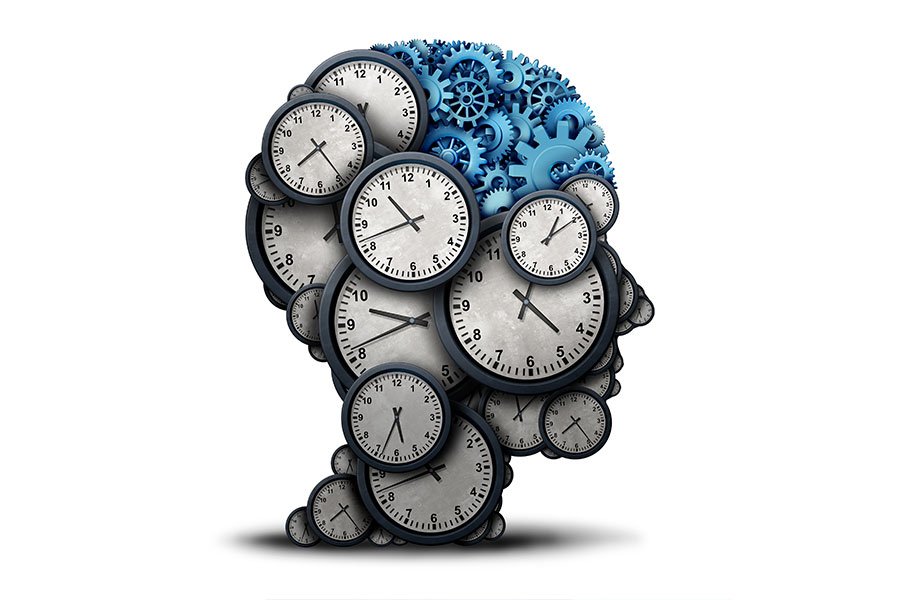
People say “internal clock” like there’s a literal ticking mechanism somewhere behind the eyes. There isn’t, not in the way a wristwatch works anyway. What the brain has instead is a scattered network involving the basal ganglia, the cerebellum, parts of the prefrontal cortex, all sort of collaborating to estimate duration based on… a lot of things. Neural firing rates. Dopamine levels. How much new information is coming in. It’s messy and distributed rather than centralized, which is maybe why time perception feels so inconsistent depending on mood, age, attention.
Some researchers describe it more as a “pacemaker-accumulator” model, where pulses get counted and that count becomes your sense of duration. If the pulses slow down or speed up, your subjective sense of time shifts even though the actual clock on the wall hasn’t moved at all. This is one piece of why time flies faster as people age, because those pulses may not fire the same way in a fifty-year-old brain as in a five-year-old one.
Why did childhood summers feel endless?
Think back to being a kid. A single summer vacation felt like it lasted forever. Three months of childhood summer could feel longer than an entire adult year does now. Weird, right? Because the actual clock time is identical.
Part of it comes down to novelty. When you’re a kid, basically everything is new. New school, new friend group, new skill, new place, new food you’ve never tried. The brain is constantly encoding fresh memories, and it turns out that memory density affects how we retroactively judge time. More memories packed into a period makes that period feel like it took longer, looking back. Fewer new memories, and it compresses down to almost nothing when you glance back at it.
This is sometimes called the holiday paradox-a week on vacation somewhere new can feel like it dragged on forever while you were living it, but also feels like it flew by once it’s over. Confusing, sure, but that’s kind of the point. Time perception in the moment and time perception in retrospect aren’t the same system, apparently.
Routine is basically the enemy of slow time
Adult life tends to fall into patterns. Wake up, commute, work, dinner, sleep, repeat. Weekends blur into weekdays which blur into months. And because the brain isn’t logging a ton of distinct new memories during a routine stretch, when you look back on that month later, there’s just… less to remember. Less texture. So it feels shorter than it actually was.
Novel experiences slow time down, at least in memory. This is well documented-people who travel, learn new skills, or go through major life changes tend to report that those periods feel longer in retrospect compared to stretches of unbroken routine. Skydiving, for example. People in genuinely dangerous or intense moments like a car accident, a fall or something else often report time slowing to a crawl. That’s probably heightened attention and memory encoding going into overdrive, not an actual change in how fast neurons fire, though some researchers disagree on that distinction and it gets complicated fast.
The proportional theory
Here’s one explanation that gets repeated a lot, sometimes credited to the psychologist Paul Janet from way back in the 1800s. A year to a five-year-old is one-fifth of their entire life. That’s a massive chunk. A year to a fifty-year-old is one-fiftieth. Proportionally tiny. So each year just carries less relative weight as you accumulate more years behind you.
It’s a neat mathematical idea and it does line up with a lot of anecdotal experience. But it’s also probably too simple on its own, because it doesn’t explain why a boring afternoon at forty can feel longer than an exciting afternoon at forty, even though the proportional math stays the same within a single day. So there’s clearly more going on than just division.
Dopamine and the speed of your internal count
Dopamine plays a role here too, and this is one of the more interesting threads in aging brain changes research. Dopamine levels tend to decline gradually starting in your twenties, and dopamine appears to be tied to the rate of that internal pulse-counting mechanism mentioned earlier. Less dopamine, potentially, means fewer pulses counted per actual second, which could make subjective time compress-the brain thinks less time has passed than really has.
This is still an active area of study, not settled science by any means, and some of the evidence comes from Parkinson’s patients, where dopamine is severely reduced and time perception gets noticeably distorted. Doesn’t prove the same mechanism scales perfectly down to normal aging, but it’s suggestive. Worth sitting with, even if it’s not the full picture.
Memory, attention, and why old people mention this stuff constantly
Ask anyone over sixty about time and they’ll usually bring this topic up unprompted. It’s not just nostalgia talk. Memory and time are deeply linked-how we perceive time now, and how we remember it later, both depend on how attention was allocated in the moment. There are methods to improve memory and recall which are discussed in the previous blog.
As attention gets divided across more responsibilities-work, family, health stuff, whatever life stage brings fewer moments get flagged as memorable. The brain isn’t logging everything the way it did during childhood, when nearly everything was new and worth encoding. So the days blur, the months blur, the internal clock brain system has less material to work with when constructing a sense of “how long was that, really.”
There’s also an attention-based theory that suggests time perception depends partly on how much conscious attention you’re paying to time itself. Adults get absorbed in tasks and stop monitoring the clock, and that absorption itself makes time seem to vanish faster.
So can you actually slow it back down?
Sort of. Not completely, no magic fix here. But introducing more novelty seems to genuinely help-new places, new skills, breaking routine occasionally, paying attention rather than going on autopilot. Some people talk about mindfulness practices helping too, since deliberately noticing the present moment ties back into that attention-based mechanism. Doesn’t reverse aging brain changes, obviously, nothing does that, but it might shift the felt experience a little.
Might not work for everyone the same way either. Some of this research is based on self-report, which is inherently a bit shaky-people describing subjective feelings that are hard to measure objectively. So take some of these explanations as reasonably well-supported theories, not iron laws of neuroscience.
FAQs
1. Why does time feel faster as you get older?
A mix of fewer new memories, lower dopamine, and each year being a smaller fraction of total life lived.
2. Is there an actual clock in the brain?
Not a literal one-more a distributed system across regions like the basal ganglia and cerebellum.
3. Can new experiences really slow down time perception?
Yes, at least in memory. New experiences create richer memories, and seem longer in retrospect.
4. Does dopamine affect how we perceive time?
It seems to, though research is still ongoing. Lower dopamine may mean fewer internal “pulses” counted per second.
5. Can anything reverse this feeling of time speeding up?
No, not completely, but a little shake-up of routine and a little more attention to the present can help.