


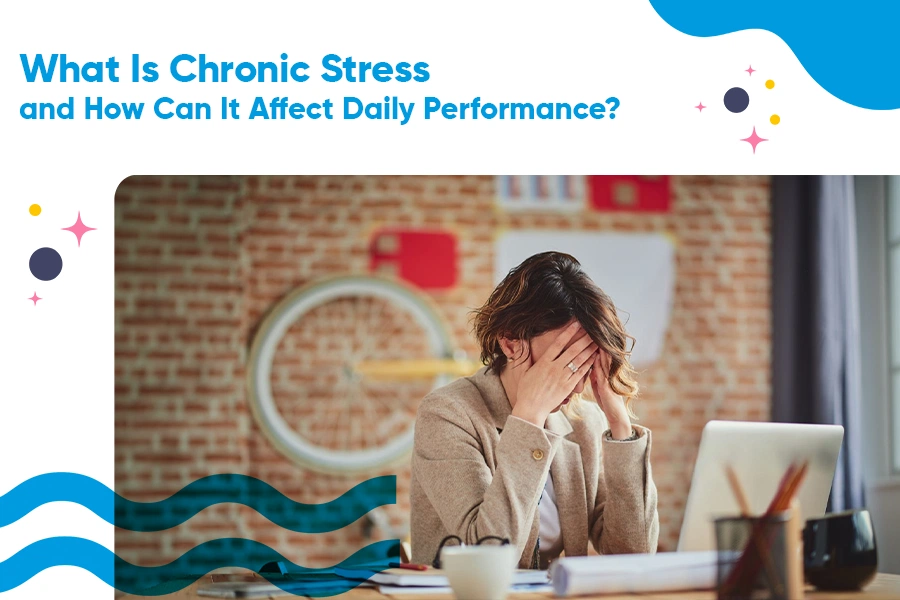
Think about the feeling when you’re running late. Maybe you have a meeting you’re running late to or have a lecture that you absolutely cannot miss. Think about how it feels in that moment of panic. Your heart is racing, your palms are clammy, and you’re pretty sure you’re sweating from anxiety. This is an experience of acute stress. These symptoms will come and go when the stressful experience is over.
However, chronic stress, the one we will be speaking about in this article, is something that stays instead of leaving your body. It has a habit of lingering, and linger it does. In the modern world, and the world being at our fingertips, we tend to live a very busy and overstimulated life. Somehow our phone is always buzzing with a notification or a call, and we’re expected to somehow always stay online.
Our bodies are wondrous creations and have been built to handle short bursts of stress but it starts taking a toll when the stress becomes too constant. Understanding prolonged and chronic stress effects can help individuals know how to manage their stressors and work towards better health.
Related: How Stress Impacts Sleep Quality and Cognitive Function
What Is Chronic Stress and How Does It Affect the Body?
Stress is normal, that part gets said a lot. A deadline lands, the heart thumps, palms go damp, and ten minutes later it’s over. Fine, there’s nothing wrong with that.
Chronic stress is when it doesn’t end. Weeks turn into months. Sometimes it’s a job, sometimes money, sometimes a parent who needs care every single day, and sometimes nobody can even name it, it’s just there. Less of a spike, more of a hum in the background.
The body treats an overflowing inbox like a threat from a predator, which sounds dramatic but is basically how the wiring works. The body releases adrenaline first and cortisol after that. Everything gets set to “alert.” It’s handy for a short stretch, but as mentioned, it’s not so handy at month eight.
A lot of people hear about cortisol chronic stress and assume cortisol is simply the villain. It isn’t. It helps get a person out of bed, keeps blood sugar steady, and reins in inflammation. The problem is when levels stay up, or the daily rise and fall gets flattened out, and the body kind of stops listening to the signal.
Related: Chronic Fatigue – How Modalert or Modaheal Can Provide Relief
Chronic stress effects creep, that’s the thing. Nobody notices on a Monday. Maybe your sleep is a little worse, your shoulders ache, and a cold drags on for two weeks instead of four days. Then suddenly it’s been a year, and your body has been tense and tired all this while without you consciously noticing.
How Does Chronic Stress Affect Brain Function and Daily Performance?
The brain gets hit as well, and honestly this is usually where people first notice, though they tend to blame age or too little coffee. Planning, focus, and weighing all the options are all cognitive processes that lean on the prefrontal cortex, which doesn’t cope well with a constant flood of stress hormones. It goes a bit quiet. The amygdala, the alarm bell part, gets louder. As a result of this, individuals might experience a short temper, wandering attention, or standing in the kitchen with no clue why.
Studies on stress and cognitive function point mostly the same way. A person’s attention narrows, their working memory slips, and their choices may feel harder than they ought to. The output suffers too. An email that once took five minutes may take fifteen and then get reread twice, a report may run long, or small errors may slip past.
Now, the link between stress and performance isn’t a straight line, and that gets lost a lot. A little pressure helps, it sharpens people up. Yerkes-Dodson claimed that little positive eustress helps push the body and get a person moving. Past a certain point it flips. Chronic stress effects sit on the far side of that flip and stay put.
Sleep makes everything worse, since memory gets filed away at night and stress chews up sleep. It’s a loop that can trap people. However, the better news is that chronic stress effects on thinking often ease when the stress does. It’s just not as fast.
What Are the Signs and Health Effects of Prolonged Stress?
The signs differ wildly. Chronic stress effects may look like headaches for one person, stomach trouble for the next, and for someone else it’s mostly snapping at a partner over nothing.
Some other signs of chronic stress can appear in bad sleep or sleeping way too much. Individuals can also experience a tight neck, racing thoughts around 2 a.m., appetite going up or down, catching everything that goes around the office, dodging friends, or a flat feeling, where even nice things don’t feel as positive and there’s a feeling of anhedonia.
Over the long run the stress health effects get heavier. Higher blood pressure, a greater chance of heart disease, gut problems, a weaker immune response, and more anxiety and depression. All of these signs have been linked to prolonged stress. Then there’s also cortisol, which also seems to push fat storage toward the belly, and blood sugar can get harder to control.
Though, none of this is stress-only. Thyroid trouble, anemia, and sleep apnea can all look alike. So if the symptoms hang on, then you should consult a medical professional first before forming assumptions. Chronic stress effects are more about a pattern than any one symptom. If there have been weeks of lousy sleep, constant tension, and a short fuse, then that might be a pattern you should pay attention to.
How Can Chronic Stress Lead to Burnout and Mental Fatigue?
Burnout is basically chronic stress that ran so long the tank hit empty. The World Health Organization calls it an occupational phenomenon, coming from workplace stress that wasn’t managed well. There are a few components to it, which usually look like exhaustion, cynicism, or distance from the job, and feeling less capable at it.
Burnout symptoms look like ordinary tiredness at first. Then Sunday evenings turn dreadful. Then caring about the work gets harder, and even small requests feel huge. Mental fatigue is its own thing, not the same as being physically tired. The foggy heaviness, mental fatigue, and stress brought on don’t vanish after one good night or a weekend.
However, it is extremely important for individuals to know that it’s not laziness, whether they themselves are going through it or not. People who burn out are often the ones who cared most and pushed hardest, which is kind of the cruel part. Chronic stress effects pile up, and burnout is roughly where the pile tips.
How Does Work Stress Affect Overall Health and Performance?
Work is the big one for most adults. The work stress impact doesn’t stop when the laptop shuts. It comes home, sits at the dinner table, and climbs into bed.
Long hours, vague expectations, no say in the schedule, a phone buzzing nonstop. Remote work blurred things further, so the day never quite ended. In a lot of regions, plenty of workplaces still treat being always reachable like a virtue.
Employers pay for it in sick days, mistakes, friction between coworkers, and resignations. Then there’s the quieter cost, and that’s presenteeism. The body might be at the desk, but the mind runs at sixty percent, maybe.
For the person it spills over. They have lesser patience with family. They may also experience skipped workouts, order takeout again, and just have another bad night. Then the health problems feed back into the job, because a tense, tired body doesn’t perform.
Related: Science Of Cognitive Load
Chronic stress effects at work get waved off as “just a busy season.” Sometimes it is true, but when the busy season is going on for two years, maybe it’s not a season.
What Can You Do to Manage Chronic Stress?
No single set of stress management techniques fits everyone, and anyone promising a quick fix is probably selling something.
Some basics hold up anyway. Getting good sleep is important, even though it’s the first thing to go. Movement helps, and it doesn’t need to be the gym, a 20-minute walk counts. Slow breathing settles the body within minutes. One thing that can also help is getting in a lower amount of caffeine and alcohol. It can help certain people since some people are more sensitive to caffeine and easily get affected by it.
Boundaries matter more than expected. Work notifications should be turned off after a pre-decided set hour. You should sit down and actually eat and enjoy your lunch. For health boundaries, you can also start by saying no to the extra project, or “not right now” at least.
Talking helps, maybe to a friend, a partner, or a coworker who gets it. Cognitive behavioral therapy has decent evidence for stress and anxiety, and plenty of employers in both countries run support programs that people forget about.
Sometimes the stressor itself has to change, which is harder. A workload too big for one person is a workload problem, not a character flaw. Chronic stress effects that won’t ease or that start hitting daily life hard are worth taking to a professional or a therapist. And if it ever feels unmanageable or there are thoughts of self-harm, call a crisis line.
FAQs
1. What are the most common chronic stress effects?
Poor sleep, irritability, trouble concentrating, and tension headaches show up a lot.
2. What is chronic stress?
Stress that lasts for weeks or months without a real break, keeping the body in alert mode.
3. Do chronic stress effects include memory problems?
Yes. High stress hormones over time can make attention, memory, and decision-making weaker.
4. Is burnout the same thing as chronic stress?
Not exactly. Burnout is usually where long-term work stress ends up when it goes unmanaged.
5. When should someone see a doctor about stress?
When symptoms last more than a few weeks or start getting in the way of work, sleep, or relationships.